Period Acne: Why You Get It and How to Prevent Acne Before Your Period Naturally

Key Facts
- Hormonal fluctuations before your period are the main cause of acne: Changes in estrogen and progesterone levels trigger excess oil (sebum) production, which clogs pores and causes breakouts—especially around the chin and jawline.
- Period acne follows a cyclical pattern linked to your menstrual cycle: It typically appears 7–10 days before menstruation and subsides once your period begins, making it predictable and easier to manage over time.
- Consistent skincare helps prevent acne before your period naturally: Gentle cleansing, exfoliation, and non-comedogenic products reduce oil buildup and keep pores clear, lowering the chance of hormonal breakouts.
- A hormone-friendly diet can reduce period acne flare-ups: Cutting down on dairy, sugar, and processed foods while eating more zinc-rich and anti-inflammatory foods helps balance hormones and support clearer skin.
- Managing stress and sleep is crucial to control hormonal acne: Elevated stress hormones like cortisol can worsen acne, so practicing relaxation techniques and getting enough sleep can help keep your skin calm during your cycle.
Period acne, or hormonal acne, happens when hormone changes during your menstrual cycle cause your skin to produce more oil. This extra oil can clog pores and lead to breakouts, especially on your chin, jawline, and lower face. In this guide, you will learn:
- Why do you get acne before your period
- Period acne locations and what it looks like
- How to prevent period acne naturally
- How to manage and prevent period-related pimples
- When to see a dermatologist or gynecologist
What is Period Acne?
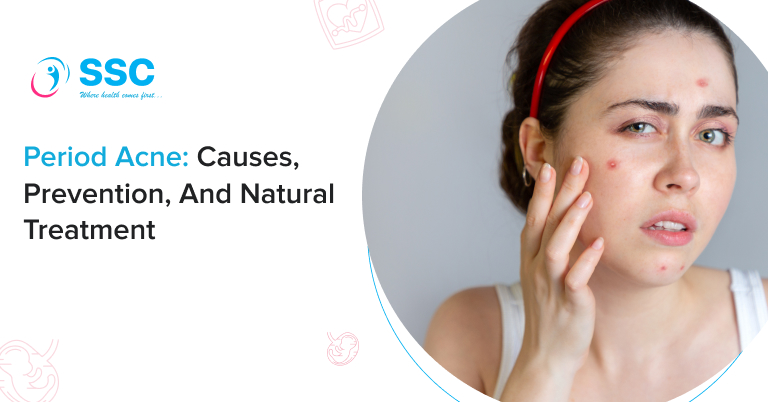
Period acne refers to hormonal breakouts that occur about 7–10 days before your period and improve as your period ends. Unlike regular acne, period acne often appears as:
- Deep, cystic pimples on the chin and jawline
- Painful, inflamed nodules
- Smaller whiteheads and blackheads clustered around the mouth and lower face
These breakouts are linked to hormonal changes in your menstrual cycle, which affect your skin’s oil production and inflammation levels.
Why Do You Get Acne During Your Period?
The menstrual cycle influences hormones like estrogen and progesterone, which in turn affect testosterone levels. Here’s what happens:
- Before your period: Progesterone drops, and relative testosterone increases, leading to more sebum (oil) production.
- Excess sebum mixes with dead skin cells, clogging pores.
- This environment encourages bacterial growth (Cutibacterium acnes), causing inflammation and breakouts.
If you have PCOS (Polycystic Ovary Syndrome) or hormonal imbalances, you may notice period acne is more severe or persistent.
Period Acne Location: Where Do Breakouts Happen?
Period acne commonly appears in the following locations:
- Chin
- Jawline
- Lower cheeks
- Around the mouth
These areas are more sensitive to hormonal changes and oil production, leading to painful cystic pimples, whiteheads, and blackheads.

What Does Period Acne Look Like?
Period acne often:
- Appears as painful cysts or nodules
- Clusters around jawline, chin, and lower cheeks
- Becomes red and tender before your period
- Improves once your period ends
How to Prevent Acne Before Period Naturally
If you are looking for how to prevent acne before your period naturally without harsh medications, these strategies can help:
Avoid Scrubbing
Use a gentle, salicylic acid cleanser to keep pores clear. Avoid harsh scrubbing, which can irritate your skin.
Maintain a Consistent Skincare Routine
- Exfoliate 1–2 times a week with gentle chemical exfoliants (AHAs/BHAs).
- Use oil-free moisturizers to maintain hydration without clogging pores.
Eat a Balanced, Low-Glycemic Diet
High-sugar foods and dairy may trigger acne in some women. Focus on fruits, vegetables, whole grains, and lean proteins to help stabilize blood sugar and hormones.
Manage Stress
Stress can increase cortisol, which can worsen acne. Try yoga, meditation, or regular exercise to help manage stress levels.
Avoid Touching or Picking at Pimples
Touching your face can transfer bacteria and increase inflammation, leading to scarring.
Stay Hydrated
Drinking enough water helps flush out toxins and supports healthy skin.
Does Period Blood Help with Acne?
No, there is no scientific evidence that applying period blood on your face helps with acne. This is a popular myth on social media, but it can increase the risk of skin infections and irritation. If you want to treat acne effectively, it’s best to use dermatologist-approved treatments.
Medical Treatments for Period Acne
If natural methods are not enough, consult a gynecologist or dermatologist. Treatment options include:
- Topical retinoids to prevent clogged pores
- Oral contraceptive pills to balance hormones and reduce acne
- Spironolactone, which lowers androgen levels to reduce oil production
- Prescription antibiotics for severe inflammatory acne
Period Acne vs PCOS Acne: What’s the Difference?
While period acne flares up around your cycle, PCOS (Polycystic Ovary Syndrome) acne:
- Is persistent throughout the month
- Often appears with irregular periods and excess hair growth
- May require additional hormonal evaluation and treatment
If you suspect PCOS, consult your gynecologist for evaluation and testing.
When to See a Doctor
Consider seeing a dermatologist or gynecologist if:
- Acne is painful, persistent, or worsening
- You develop cysts that leave scars
- Acne affects your confidence and daily life
- You have other symptoms, like irregular periods or excessive facial hair
Can Period Acne Be Prevented?
While you cannot completely prevent hormonal fluctuations, you can reduce the severity of period acne by:
- Maintaining a consistent skincare routine
- Managing stress and diet
- Staying hydrated
- Consulting your doctor for hormonal treatments if needed
Final Thoughts
Dealing with period acne can be challenging, but you do not have to live with monthly breakouts. By taking the right steps, you can manage acne naturally and effectively.
If you need personalized treatment and support, schedule a consultation with the gynecology experts at Sai Speciality Center today.
Frequently Asked Questions
What does period acne look like?
Period acne often appears as red, inflamed pimples or cysts, especially on the lower face, jawline, chin, and neck. These breakouts are usually deeper, more painful, and resistant to typical acne treatments due to hormonal changes.
How long does period acne last?
Period acne typically lasts for 7 to 10 days. It often starts a few days before your period and may clear up once your menstrual cycle ends and hormone levels stabilize.
How can I get rid of period acne overnight?
To reduce period acne overnight, apply a spot treatment with benzoyl peroxide or salicylic acid, use a cold compress to reduce inflammation, and keep the area clean. Natural options include applying diluted tea tree oil or an ice cube wrapped in cloth to the pimple.
Is acne a sign of period or pregnancy?
Acne before your period is more common and caused by hormonal fluctuations. While acne can also occur during early pregnancy, it’s not a reliable sign. A pregnancy test is the only accurate way to confirm.
How to treat and prevent acne before your period naturally?
To naturally prevent period acne, manage stress, maintain a balanced diet, avoid sugar and dairy, and consider supplements like zinc or evening primrose oil. Regular exercise and using non-comedogenic skincare products can also help. Natural treatments at home include green tea masks, honey, and aloe vera.