Bleeding During Pregnancy? Here’s Why It’s Not Your Period

Key Facts
- No, you cannot have a period while you are pregnant. Menstruation stops during pregnancy because the fertilized egg implants in the uterus, and the body maintains the uterine lining to support the pregnancy.
- Periods stop once pregnancy begins. The menstrual cycle halts because the body produces hormones that prevent the uterine lining from shedding—making true periods during pregnancy impossible.
- You may still experience light bleeding or spotting. While it’s not a real period, some women report bleeding due to implantation, cervical changes, or other minor causes in early pregnancy.
- Heavy bleeding during pregnancy could signal a serious issue. If bleeding is heavy or accompanied by cramps, it may indicate complications like miscarriage or ectopic pregnancy and requires immediate medical care.
- Tracking your symptoms and bleeding patterns is crucial. Noting the timing, flow, and color of any bleeding can help healthcare providers distinguish between harmless spotting and a potential pregnancy complication.
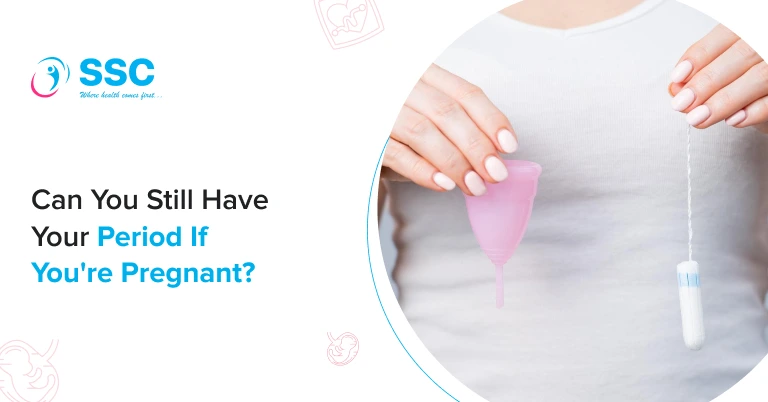
Can you still get your period when you’re pregnant?
The short answer: No.
Your body stops menstruating during pregnancy to support the developing embryo. But some women do experience light bleeding or spotting, and that can easily be mistaken for a period.
In this blog, we’ll explain why this happens, how to tell if it’s normal, and when to see a doctor.
Why You Can’t Have a Period While Pregnant?
Menstruation happens only when ovulation occurs and the released egg is not fertilized. The uterine lining sheds, resulting in a period. But during pregnancy:
- Ovulation stops
- Your body maintains the uterine lining to support the baby
- Any bleeding that occurs isn’t a true period
So if you’re pregnant and bleeding, something else is causing it, and understanding the cause is important.
What’s Causing the Bleeding, Then?
Let’s explore the most common reasons for bleeding during pregnancy, trimester by trimester.
First Trimester Bleeding Causes
Bleeding is most common in the first 12 weeks. It may be harmless, or it could signal a complication.
1. Implantation Bleeding
- It happens when the fertilized egg attaches to the uterus
- Timing: 10–14 days after conception
- Clue: Light spotting, pink or brown, lasts 1–2 days
- Needs Attention? Generally not; this is considered normal
2. Hormonal Changes
- Fluctuations in early pregnancy can make the cervix more sensitive
- Clue: Spotting after sex or physical activity
- Requires Evaluation If: Spotting is frequent or increases in volume
3. Ectopic Pregnancy
- The fertilized egg implants outside the uterus (commonly in a fallopian tube)
- Symptoms: Sharp lower abdominal pain, dizziness, shoulder pain
- Urgency: Immediate medical attention is critical
4. Miscarriage
- Bleeding with strong cramps, clots, or tissue
- Clue: Heavy red bleeding, persistent pain
- Action: Emergency medical evaluation needed
5. Infections or Cervical Irritation
- Infections like UTIs or STIs may irritate the cervix
- Cervical exams or sex may also trigger light bleeding
6. Other Rare Causes
- Subchorionic Hemorrhage: Blood trapped between placenta and uterine wall
- Gestational Trophoblastic Disease (GTD): Abnormal cell growth that mimics pregnancy
Second & Third Trimester Bleeding Causes
Bleeding later in pregnancy needs closer attention and evaluation.
1. Cervical Exams
- A common cause of minor spotting after checkups
- Usually painless and harmless
2. Sexual Intercourse
- Increased blood flow can make vaginal tissues more prone to bleeding
- Clue: Light bleeding post-intercourse
- Seek Advice If: Bleeding is persistent or unusually heavy
3. Placenta Previa
- Placenta covers the cervix partially or fully
- Symptoms: Painless, bright red bleeding in the second or third trimester
- Evaluation: Ultrasound required; may need precautions
4. Placental Abruption
- Placenta detaches from uterine wall before delivery
- Clue: Heavy bleeding with abdominal pain and fetal distress
- Action: Requires emergency hospital care
5. Preterm Labor
- Bleeding may occur as the body prepares for early delivery
- Symptoms: Contractions before 37 weeks, back pain, pressure
6. Uterine Rupture
- Rare but life-threatening, usually during labor in women with prior C-sections
- Clue: Severe pain, rapid bleeding, loss of fetal heartbeat
- Urgency: Immediate cesarean section is essential
Period vs. Pregnancy Bleeding – A Quick Comparison
| Feature | Menstrual Period | Pregnancy Bleeding |
|---|---|---|
| Timing | Monthly, regular | Early pregnancy (weeks 4–8) |
| Flow | Moderate to heavy | Light spotting |
| Duration | 3–7 days | 1–2 days |
| Color | Bright red, may contain clots | Pink or brown |
| Pain/Cramping | Yes | Often painless |
Is it Normal to Experience Spotting During Pregnancy?
It is completely normal to experience spotting during pregnancy.
Bleeding during pregnancy can happen for many reasons. It’s important to know the difference between spotting and heavier bleeding.
| Type | Description |
|---|---|
| Spotting | Few drops of blood, no pad or tampon needed |
| Bleeding | Requires sanitary protection; may soak underwear |
Spotting occurs in roughly 15–25% of instances during the first few months of pregnancy. This can happen because pregnancy increases blood flow to the cervix, making it weaker and more prone to bleeding.
Some spotting may occur 10–14 days after conception, when the fertilized egg attaches to the uterus, a process known as implantation.
When to See the Doctor:
Seek medical attention immediately if you experience bleeding along with:
- Intense cramps or pain in your belly
- Feeling lightheaded or fainting
- Heavy bleeding or passing blood clots
- Sharp pain in your lower stomach or pelvis
- Bright red bleeding that soaks through a pad
Especially during early pregnancy, bleeding with pelvic pain may indicate a serious complication like an ectopic pregnancy or miscarriage. Early evaluation can make a significant difference.
If you are pregnant, you cannot get your period. Some people might experience light bleeding, mild cramps, tiredness, mood swings, and lower back pain at the start of their pregnancy, but if these symptoms become strong or persist for a long time, it is essential to consult your doctor.
Tests Your Doctor May Recommend
- Pregnancy Test: Confirms pregnancy status
- Ultrasound: Locates pregnancy, rules out ectopic
- hCG Blood Test: Monitors hormone levels for fetal health
Bottom Line:
No, you cannot have your period while pregnant.
But yes, light bleeding or spotting does happen and it’s not always dangerous. Bleeding during pregnancy can be scary, but you don’t have to manage it alone.
Book an appointment with Dr. Kavitha Lakshmi Easwaran for further queries.
Frequently Asked Questions
Can you be two weeks pregnant and still have your period?
No, periods stop when pregnancy begins, but some women experience light spotting. This can be due to implantation bleeding or hormonal changes. A pregnancy test can help confirm.
How is it possible to have a full period but still be pregnant?
A period does not happen in pregnancy, but heavy bleeding can occur due to hormonal shifts, implantation, or complications. It’s important to check with a doctor to rule out any risks.
Can you be pregnant and still get your period every month without knowing?
Some women experience regular spotting or light bleeding that seems like a period. This can be caused by hormonal changes or conditions like a subchorionic hematoma. A test is the best way to confirm.
What are the symptoms of pregnancy if you're still getting your period?
Even with bleeding, symptoms like nausea, fatigue, sore breasts, and mood swings can occur. Some women also experience bloating and food cravings. A missed period is not always the only pregnancy sign.
Is it possible to have a period in early pregnancy?
No, but light bleeding can happen due to implantation or cervical sensitivity. Some women also experience breakthrough bleeding when their body adjusts to pregnancy hormones.
Can you get your period in the first week of pregnancy and still be pregnant?
A period does not occur in pregnancy, but light bleeding may happen when the fertilized egg attaches to the uterus. It’s usually lighter and shorter than a normal period.
When do periods stop during pregnancy?
Periods stop right after conception because pregnancy hormones prevent ovulation. Some women may still experience occasional spotting, but it’s not the same as a period.
I just had my period, but I feel pregnant—what could be the reason?
Some women mistake early pregnancy bleeding for a period. If you feel pregnant, symptoms like nausea and fatigue may indicate pregnancy, so taking a test is a good idea.